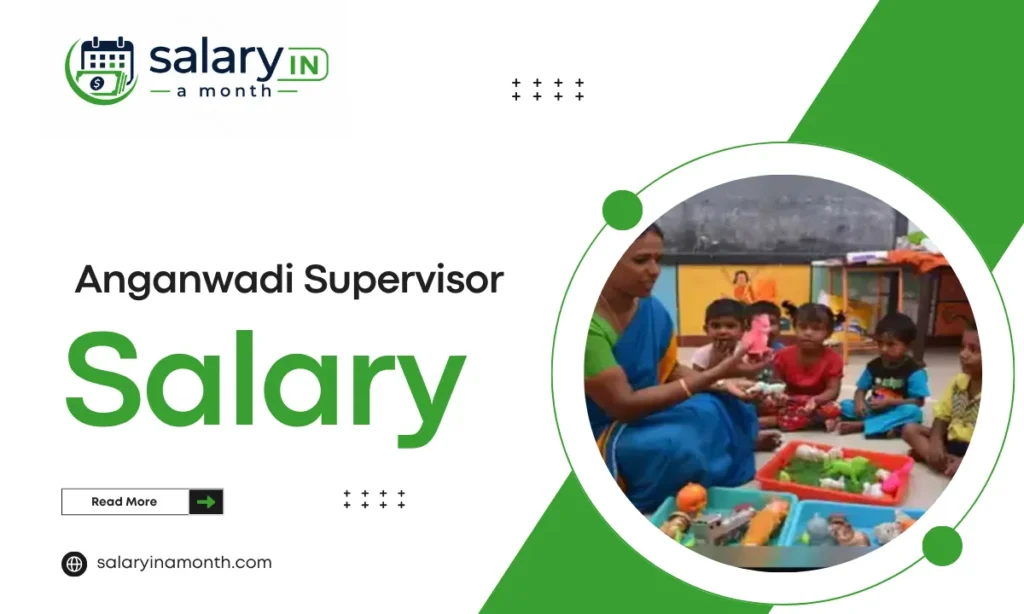
Anganwadi Supervisors play a crucial role in India’s rural and urban child care system by ensuring the smooth functioning of Anganwadi centres, supporting maternal and child health programs, and supervising frontline workers. As representatives of the Integrated Child Development Services (ICDS), Anganwadi Supervisors are responsible for monitoring multiple Anganwadi workers and ensuring quality early childhood care, nutrition support, and community outreach.
This article provides a detailed breakdown of the Anganwadi Supervisor salary in India for 2026, including in‑hand salary, pay scale, allowances, job responsibilities, and avenues for career advancement.
Who is an Anganwadi Supervisor?
An Anganwadi Supervisor is a government‑appointed official responsible for supervising the activities of several Anganwadi Centres within a designated area. Their primary responsibilities include training and guiding Anganwadi Workers, ensuring proper provision of nutrition and health services to children and pregnant or lactating women, maintaining records, reporting to higher authorities, and mobilizing community participation.
Anganwadi Supervisors work under the Integrated Child Development Services (ICDS) scheme, which is implemented by state governments.
How Anganwadi Supervisor Salary Works
The salary of an Anganwadi Supervisor depends on the state government’s pay scale, budget allocations, and grade structure defined by state ICDS departments. Because Anganwadi workers and supervisors are governed by varied state government orders, salaries can differ significantly between states like Uttar Pradesh, Bihar, Maharashtra, Tamil Nadu, and others.
However, most states align the salary structure within a consolidated pay band with regular increments, allowances, and benefits for supervisors.
Anganwadi Supervisor Pay Scale and Grade
Anganwadi Supervisors are placed in structured pay bands as per state government norms. Supervisors typically fall into mid‑level government pay brackets with regular step‑increases based on experience.
| Experience Level | Approx. Basic Pay |
|---|---|
| Entry Level (Fresh Appointment) | ₹25,000 – ₹28,000 |
| 3 to 7 Years | ₹30,000 – ₹35,000 |
| 8 to 12 Years | ₹36,000 – ₹42,000 |
| Senior Level | ₹45,000 – ₹55,000 or more |
States may designate supervisors under specific government pay bands which affect increment patterns and allowances.
Anganwadi Supervisor In‑Hand Salary
In‑hand salary refers to what the supervisor receives after statutory deductions such as provident fund (PF), professional tax, and income tax where applicable. The approximate in‑hand salary for Anganwadi Supervisors is usually higher than basic pay as it includes allowances.
| Portion | Approximate Amount |
|---|---|
| Basic Pay | ₹25,000 – ₹32,000 |
| Dearness Allowance | ₹8,000 – ₹12,000 |
| Travel or Transport Allowance | ₹2,000 – ₹4,000 |
| Other Allowances | ₹2,000 – ₹4,000 |
| Gross Salary | ₹37,000 – ₹52,000 |
| Deductions | ₹5,000 – ₹8,000 |
| In‑Hand Salary | ₹30,000 – ₹45,000 |
Actual figures vary depending on state government policies and the availability of allowances.
Allowances and Benefits
Anganwadi Supervisors are typically entitled to several allowances and benefits that enhance their total compensation.
- Dearness Allowance: This allowance is provided to partially offset cost of living increases and inflation.
- Transport Allowance: Supervisors often receive transport or travel allowances to cover travel expenses for monitoring and reporting duties.
- Medical Benefits: As per state government rules, supervisors and sometimes their families are eligible for basic medical coverage.
- Leave Benefits: Supervisors are entitled to government‑mandated leaves, including earned leave, casual leave, medical leave, and sometimes paid holidays.
- Social Security or Pension: Depending on state government regulations, supervisors may be under pension benefits or covered through social security schemes.
- Training and Development: Regular training programs and skill development workshops are sometimes provided to help supervisors update their knowledge and improve service delivery.
Job Role and Responsibilities
The key responsibilities of an Anganwadi Supervisor revolve around supervising, guiding, and monitoring the proper functioning of Anganwadi Centers. These include:
- Supervising multiple Anganwadi Workers in assigned areas
- Ensuring quality delivery of nutrition and health services
- Conducting regular field visits and monitoring centre activities
- Training workers on reporting, service delivery, and record‑keeping
- Maintaining case records of children, pregnant women and lactating mothers
- Reporting progress and issues to higher authorities
- Ensuring timely supply of supplementary nutrition
- Conducting community outreach and awareness programs
- Organizing meetings, reviews, and reporting compliance
The role requires strong organizational skills, communication abilities, and commitment to community welfare.
Working Environment
Anganwadi Supervisors work in both rural and urban areas. Their job often takes them into communities, village clusters, and household environments, requiring constant monitoring, travel, and public engagement. Work schedules are usually structured but may vary based on monitoring plans, community needs, or health and nutrition campaigns.
Supervisors interact regularly with health workers, community members, and local officials.
Career Growth and Promotion
Anganwadi Supervisors have opportunities for career growth based on experience, performance, additional qualifications, and departmental norms.
| Level | Position |
|---|---|
| Entry | Anganwadi Supervisor |
| Mid | Senior Anganwadi Supervisor |
| Higher | ICDS Field Officer |
| Executive | District ICDS Officer or Coordinator |
Promotions often bring higher pay bands, bigger responsibilities, and leadership responsibilities within the ICDS structure.
Salary Growth Over Time
As Supervisors gain experience and move to senior positions, both pay and responsibilities increase.
- First 3 Years: Basic plus allowances stabilizes
- 4 to 8 Years: Salary increases with increments
- 9 to 15 Years: Senior supervisory roles with higher pay
- More than 15 Years: Potential leadership positions with significantly higher salary
Salary growth is tied to experience, performance reviews, and state government pay policies.
Salary Comparison with Other Government Roles
| Job Role | Approx. In‑Hand Salary |
|---|---|
| Anganwadi Worker | ₹15,000 – ₹20,000 |
| Anganwadi Supervisor | ₹30,000 – ₹45,000 |
| ICDS Field Officer | ₹40,000 – ₹60,000 |
| District ICDS Officer | ₹60,000 – ₹90,000 |
Supervisors earn significantly more than frontline workers and have better career growth prospects.
FAQs
What is the starting salary of an Anganwadi Supervisor?
The starting basic salary is typically between ₹25,000 and ₹32,000 depending on the state.
What is the in‑hand salary?
After allowances and deductions, most supervisors receive ₹30,000 to ₹45,000 per month.
Do Anganwadi Supervisors receive allowances?
Yes, supervisors receive allowances such as dearness allowance, transport allowance, and other state‑specific benefits.
Is the job secure?
Yes, as a state government‑appointed position, the role offers long‑term job stability.
Can an Anganwadi Supervisor be promoted?
Yes, with experience and performance, supervisors can advance to senior ICDS roles.
Conclusion
The Anganwadi Supervisor salary in India for 2026 is competitive and reflects the importance of the position within the ICDS framework. With a reliable basic pay, structured allowances, benefits, and opportunities for career advancement, the role offers financial stability and professional growth. For aspirants passionate about community welfare, child development, and public service, the Anganwadi Supervisor position presents a meaningful and rewarding career path.
Also Know about: UP Primary Teacher Salary | TA Army Salary | Forest Guard Salary | SDM Salary | Dhirubhai Ambani International School Teacher Salary